Two ways to approach one mountain
Start with the question behind the question.
Some visitors want the independence of a self-directed mountain drive. Others want to give their attention to the sunset, the sky, and the landscape while a professional team handles the route and the high-elevation logistics. The useful choice depends on what you have prepared, who is traveling with you, and how you want to spend the evening.
A respectful starting point
Check current official guidance first.
Road conditions, visitor access, cultural stewardship guidance, weather, and high-elevation requirements can change. Before any self-directed mountain travel, review the latest official visitor information and make a conservative decision for your vehicle, group, and conditions.
What self-driving can offer
Self-driving can give you a flexible pace and the ability to choose how long you stay at particular locations. For experienced drivers with an appropriate vehicle, careful planning, and a clear understanding of current requirements, it can be a deeply personal way to see the mountain.
It also places the responsibility with you: vehicle suitability, fuel, timing, parking and access rules, warm layers, food and water, telescope or viewing equipment, route navigation, and the judgement to alter your plans when conditions change. The existing article notes that a self-drive trip requires 4WD permission, instructional material, and fuel planning; current official access guidance is the final authority.
What a guided tour changes
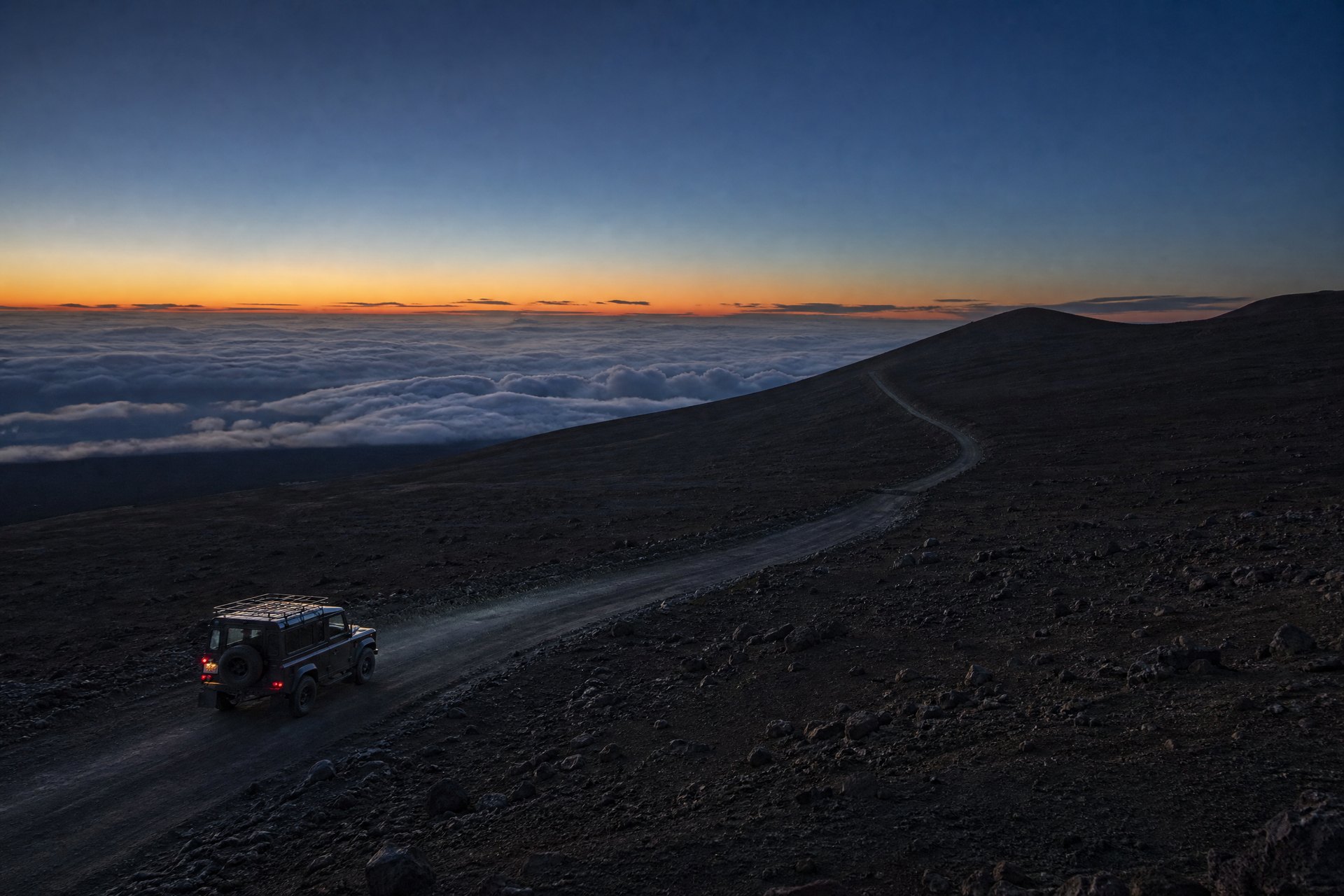
On the Mauna Kea Sunset & Stargazing Tour, the team provides custom 4×4 vans, high-elevation clothing, a hot meal, portable telescope equipment, a defined route, and narration. The existing page also positions its guides around weather monitoring, oxygen, first aid, hypoxia monitoring, and cultural, geological, and astronomy context.
- The vehicle, route, and mountain driving are handled by an experienced team.
- Arctic-style parkas and gloves are provided for the cold.
- A hearty hot supper and gourmet hot beverages are part of the published experience.
- Large portable telescopes and high-powered green lasers create a more structured stargazing session.
- Guides provide the island and mountain context that is easy to miss on a self-directed drive.
Consider the people in your group
High elevation affects people differently. If you are traveling with a group, think about each person’s comfort with cold, altitude, a long evening, changing weather, and the expectation of a serious mountain environment. A guided experience does not erase those considerations, but it gives the group a shared plan and a team accustomed to the setting.
Consider the kind of night you want
Self-driving can be the right choice for travelers who want to take primary responsibility for the route and have made the preparations to do so. A guided tour can be the better fit for travelers who want a full evening with mountain transport, warm gear, dinner, telescope access, and context arranged around them.
Neither choice is a substitute for respecting the mountain, current guidance, and the people and places connected to it. The meaningful question is whether you want to spend your energy coordinating the trip or experiencing it.
If a guided evening feels like your fit
Let the team carry the mountain logistics.
Review the published tour facts first, then connect the future booking link when the approved destination is ready.